LightBlog

mardi 1 décembre 2020

Qualcomm teases the Snapdragon 888 and confirms 14 OEMs will build smartphones with it

Qualcomm is expected to unveil its latest flagship chipset at the ongoing Snapdragon Tech Summit Digital event in San Diego, California. Ahead of the official unveiling, the company has shared a teaser for the new chipset and named 14 OEMs who will be launching devices featuring the chipset next year. As per the teaser, the company’s latest flagship chipset is called Snapdragon 888, not Snapdragon 875, and it will include the following features:

Snapdragon X60 5G Modem

The Snapdragon 888 5G will include the 3rd generation Qualcomm Snapdragon X60 5G Modem-RF System, which will offer both mmWave and sub-6 5G compatibility across all major bands worldwide. The modem will also support 5G carrier aggregation, global multi-SIM, 5G Standalone, 5G Non-standalone, and Dynamic Spectrum Sharing.

Qualcomm AI Engine

Qualcomm’s latest flagship offering will also include the new 6th generation Qualcomm AI Engine with a completely re-engineered Qualcomm Hexagon processor. The new AI Engine is capable of 26 tera operations per second (TOPS), and it will offer significant performance and power-efficiency improvements compared with the previous generation. The AI platform is further enhanced by the 2nd generation Qualcomm Sensing Hub, which incorporates lower-power always-on AR processing for new intuitive and intelligent features.

Qualcomm Snapdragon Elite Gaming

The Snapdragon 888 will also feature the new 3rd generation of Snapdragon Elite Gaming, which will significantly upgrade Qualcomm Adreno GPU performance over previous generations.

Qualcomm Spectra ISP

The new chipset will also offer better computation photography performance, thanks to the faster gigapixel speed Qualcomm Spectra ISP. The new ISP will allow users to capture photos and videos at 2.7 gigapixels per second or roughly 120 photos at 12MP resolution, which is up to 35% faster than the previous generation.

During the keynote, Qualcomm also demonstrated the 5G capabilities of the Snapdragon 888 through a radio-controlled race car connected by mmWave 5G. In the demonstration, drivers controlled two race cars from a mile away using a live video feed of the track over 5G. The demonstration was enabled by a private 5G network built in collaboration with Verizon and Ericsson. It made use of a reference design Snapdragon 888 and Snapdragon X60 5G modem.

As mentioned earlier, Qualcomm also confirmed the names of 14 OEMs who will be launching Snapdragon 888-powered devices in the coming months. These include ASUS, Black Shark, Lenovo, LG, Meizu, Motorola, Nubia, realme, OnePlus, OPPO, Sharp, Vivo, Xiaomi, and ZTE.

We expect to learn more about the Qualcomm Snapdragon 888 and upcoming devices featuring the new SoC during the two-day event. So, make sure to stay tuned to our coverage of the Snapdragon Tech Summit Digital 2020.

The post Qualcomm teases the Snapdragon 888 and confirms 14 OEMs will build smartphones with it appeared first on xda-developers.


from xda-developers https://ift.tt/3fTf4w1
via IFTTT

Amazon debuts macOS instances on its cloud for Apple developers

If you’re an Amazon Web Services (AWS) EC2 user, here is a potentially handy update for you. The company has announced the general availability of Elastic Compute Cloud Mac instances for macOS, allowing app developers in Apple’s ecosystem a way to run on-demand macOS workloads in the cloud. Previously, Amazon offered this service only for Windows and Linux.

Unlike typical virtualized instances, the new EC2 macOS instances are built on top of actual Mac Mini machines, which is certainly a big plus. Note that you’re not getting the latest Apple M1-powered variant until 2021. For now, Amazon is using the previous generation Mac Mini featuring Intel’s 8th generation Coffee Lake Core i7-8700B processor with 6 physical/12 logical cores and and 32 GB of RAM. The processor normally clocks at 3.2 GHz but goes up to 4.6 GHz in turbo mode. Developers will be able to choose between macOS 10.14 Mojave and macOS 10.15 Catalina, while macOS 11.0 Big Sur support is coming soon.

AWS Chief Evangelist Jeff Barr describes the Mac instances as something that gives Apple developers “…the ability to quickly & cost-effectively build code for multiple targets without having to own & operate your own hardware”. The premise here is simple: think of a full-fledged macOS development rig, but on AWS. You will get to benefit from the elasticity, scalability, security, and reliability provided by EC2.

AWS utilizes the Mac Mini’s high-speed Thunderbolt 3 ports to connect them with its Nitro System for 10Gb/s VPC network bandwidth and 8Gb/s storage bandwidth. The instances are accessible via VNC with a graphical interface, which means you can run Xcode and Swift development tools on them and create apps for iPhone, iPad, Mac, Apple Watch, Apple TV, and Safari. SSH access is also there for command line aficionados.

It is worth mentioning that EC2 Mac instances come with a minimum tenancy period of 24 hours, which means they cannot be part of an automatic scaling group. The macOS instances are available now in the US East (N. Virginia), US East (Ohio), US West (Oregon), Europe (Ireland), and Asia-Pacific (Singapore) regions, with other regions coming soon.


Source: Amazon AWS

The post Amazon debuts macOS instances on its cloud for Apple developers appeared first on xda-developers.


from xda-developers https://ift.tt/3ll6t6o
via IFTTT

Latest WhatsApp update brings advanced wallpaper features and improved sticker search

A few weeks ago, WhatsApp started testing a couple of new features in a recent beta release. These included a new option to mute videos before sharing, a Read Later feature to keep archived chats separate from the main conversation screen, and several advanced wallpaper customization options. With its latest update on the stable channel, WhatsApp has now started rolling out the advanced wallpaper customization options to some users.

As per a recent report from The Verge, the new wallpaper customization options include the ability to set different custom wallpapers for each chat, color variants of the original doodle wallpaper, several new nature and architecture wallpapers, and an option to set different wallpapers for light and dark mode.

Talking about the new wallpaper customization features, WhatsApp said:

“Make your chats personal and distinguishable by using a custom wallpaper for your most important chats and favorite people, and you never need worry about sending the wrong message in the wrong chat ever again.”

Along with the new wallpaper customization options, the latest WhatsApp update includes improvements for sticker search. Thanks to this, users will now be able to search for stickers with text or emoji and even browse through common stickers categories. To ensure that the sticker search feature works as intended, the Facebook-owned messenger has urged sticker creators to tag their stickers with emoji and text moving forward.

Finally, the World Health Organization’s “Together at Home” sticker pack is now available as animated stickers in the latest update. The sticker pack is available with text localized for 9 languages, including Arabic, French, German, Indonesian, Italian, Portuguese, Russian, Spanish, and Turkish.

According to Facebook, the latest WhatsApp update with all the aforementioned features is expected to reach both Android and iOS users this week. However, the update wasn’t available on any of our devices at the time of writing.

The post Latest WhatsApp update brings advanced wallpaper features and improved sticker search appeared first on xda-developers.


from xda-developers https://ift.tt/36ow9dW
via IFTTT

These are the Best Android Phones to buy in 2020

As 2020 comes to a close — thank God! — we have a more finalized idea of the entire Android landscape for this year. And it’s been a good one, with slab phones arguably reaching an apex in fluidity and screen-to-body ratio, while brands also pushed out adventurous new form factors that bend or swivel.

No matter if you have $1,400 to spend or $600, there is a very capable Android phone that will meet all your professional and personal needs. We here at XDA have the privilege of testing just about every new release, and here are the best Android phones you can buy right now:

Navigate this guide:

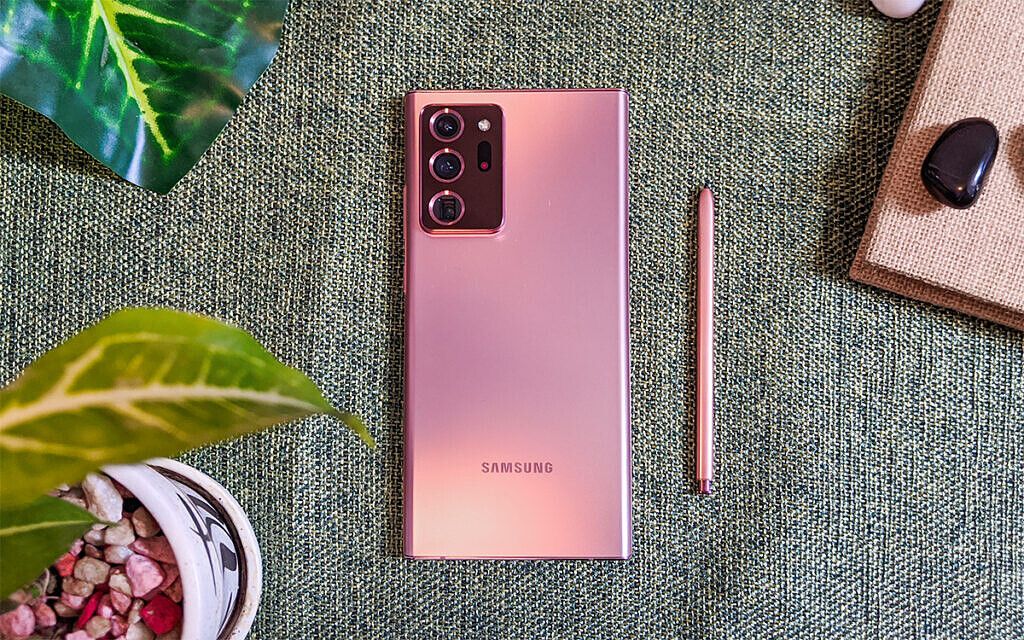
Best Android Phone Overall: Samsung Galaxy Note 20 Ultra

Best Android Phone – Galaxy Note 20 Ultra

There were several worthy contenders for this spot. However, the Galaxy Note 20 Ultra edges out some tough competition – don’t worry, we still honored them on this list in other categories – by checking more boxes. The most powerful Android chipset around? Check (if you’re buying the Snapdragon 865+ version, that is). Capable cameras that let you zoom in far or take a step back and go ultra-wide? Check. Premium, unique design, and the best screen possible? Check and check! Heck, the Note 20 Ultra even throws in a stylus to boot, which offers even more functionality most smartphones can’t claim.

Sure, we can nitpick if we want — the zoom cameras here aren’t quite at the Huawei P40 Pro+’s level; it charges much slower than the Xiaomi Mi Ultra, the boxy corners make the phone less comfortable to hold for some hands — but ultimately, no phone this year packs as much in one package with no noticeable glaring flaws.

    Samsung Galaxy Note 20 Ultra
    If you're looking for the most capable and feature-packed smartphone and not quite ready to jump to the cutting-edge foldable category yet, then look no further than the Note 20 Ultra. It has everything you'd need out of a smartphone, including a stylus!

Best Android Phone for most people: Samsung Galaxy S20 FE


Best Android Phone – Samsung Galaxy S20 FE

While the Note 20 Ultra is, in our opinion, the best slab smartphone money can buy, the just-announced S20 FE is likely the phone for most people as it still gives you much of what makes a Samsung flagship great. This includes that 120Hz Super AMOLED display, a responsive and well-thought-out UI, and well-performing cameras — except the S20 FE is half the price of the Note 20 Ultra.

You’ll have to make do with a plastic body and just Snapdragon 865 instead of the 865+, but these are concessions we think most would take to save $600-$700.

    Samsung Galaxy S20 FE
    If you're a fan of Samsung's flagships but have found the four-digit prices hard to stomach, the Galaxy S20 FE is for you. Compromises are far and few between in this sleek and powerful mid-ranger with a 120Hz Super AMOLED screen!

Best Samsung Galaxy Phones for every budget and need (updated December 2020)

Best Android Phone for software and speed: OnePlus 8 Pro

Best Android Phone – OnePlus 8 Pro

OnePlus is a brand that’s always been all about speed, and the 8 Pro is once again the fastest phone on the market. Everything – from the way apps launch at rocket speed to how the notification panel whips up and down along with your finger swipes – in the UI here has been optimized for speed. The effect looks extra fluid this year thanks to a 120Hz panel too.

When it comes to OnePlus’ UI, OxygenOS, it’s not just about speed: it’s also, in my opinion, the best Android skin around, with plenty of customization and shortcut gestures galore. Want to use multiple different icon packs on one home screen? Or change the accent color scheme of your app drawer? Or hide apps in plain sight with a simple swipe? OxygenOS offers more ways to use Android, even more so than Google’s stock UI.

The rest of the hardware is top-notch, too, although the phone looks a bit boring due to the recycled back design. For the first time in a OnePlus phone, the 8 Pro gets wireless charging and IP68 water resistance. These new additions go well with the improved camera system and the beloved alert slider hardware button.

    OnePlus 8 Pro
    OnePlus phones have always been able to go toe-to-toe with the big boys in terms of overall performance, and this year's 8 Pro is no exception. A large 120Hz AMOLED screen, Snapdragon 865, and a 48MP ultra-wide-angle camera provide more details than the less pixel-dense ultra-wides seen in many rivals. But ultimately, what sets the 8 Pro apart is its unrivaled speed and clean yet fully customizable UI.

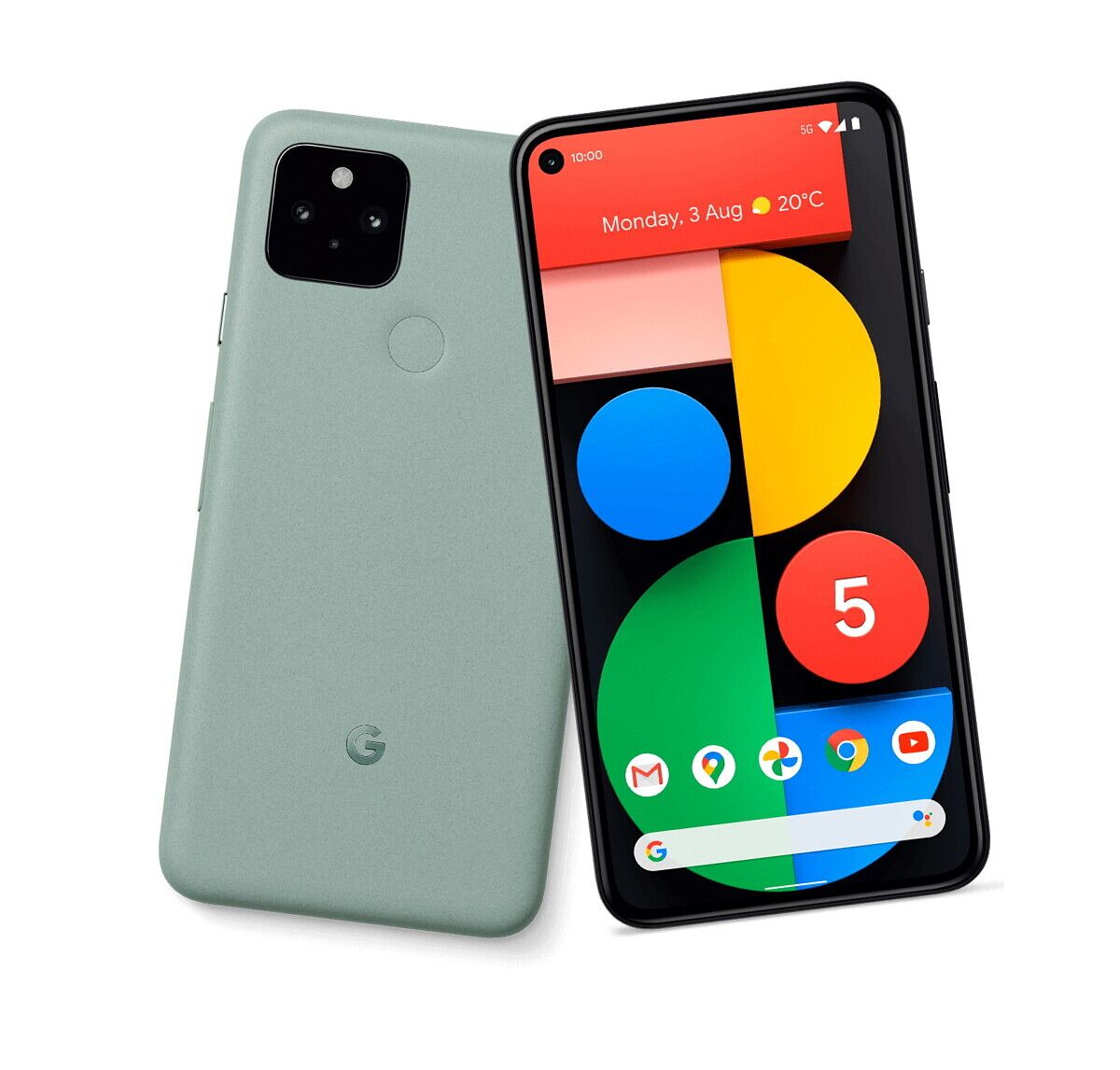
Best point and shoot camera phone: Google Pixel 5

Best Android Phone – Google Pixel 5

Google’s Pixel series, even back when it was aspiring to be a premium flagship, never really fully got hardware right. Whether it was the original Pixel’s outdated bezels, Pixel 2 XL‘s display problems, Pixel 3 XL‘s giant, unsightly notch, or the Pixel 4’s mediocre battery life and wonky facial recognition system, every generation of Pixel has had a glaring hardware flaw. But despite that, many reviewers and tech enthusiasts still gladly carried a Pixel over the years, because Google’s camera software processing was that good.

And that camera prowess is why the Pixel 5 cracks this list, despite a spec sheet and hardware craftsmanship that sits a tier or two below other brands’ offerings listed here. But with the Pixel 5, you know you’re getting color science that is always on point, dynamic range perfectly balanced, and the best portrait/bokeh mode around.

And for the first time, we even get an ultra-wide-angle camera in a Pixel. Throw in the usual Pixel perks like the purest version of Android and specific Pixel features, and the Pixel 5 is an easy recommendation.

    Google Pixel 5
    Google's newest brings several new features, but the most important is that Pixel camera with its glorious image processing and dynamic range is back. If you just want to point, tap the shutter button, and expect a great shot, look no further.

Best Cheap Android Phone: Google Pixel 4a

Best Android Phone – Google Pixel 4a

If you want that Pixel 5 primary camera performance but want to save a bit, the Pixel 4a (not to be confused by the larger and more expensive Pixel 4a 5G) is one of the cheapest options on this list.

You lose out on the ultra-wide-angle camera and 5G connectivity, but you still have virtually the same primary camera as the Pixel 5. If it’s just standard 1x point-and-shoot photos, the Pixel series is hard to beat. If you want to see other choices on a budget, check out our guide to the best cheap android phones!

    Google Pixel 4a
    The Google Pixel 4a brings virtually the same main camera as the Google Pixel 5, which means it's got one of the very best cameras on the market. Everything else about the phone is solid if unspectacular -- but when at this price, and with a camera performance this next level, it's hard to complain.

Best overall camera phone: Huawei P40 Pro+

Best Android Phone – Huawei P40 Pro Plus

While the Google Pixel 4a’s primary camera is arguably the king due to its color science, dynamic range, and unbeatable portrait mode, the Huawei P40 Pro+ is inarguably the most capable and versatile camera system of the year. Let’s start with the Periscope zoom lens. Other phones like the Galaxy Note 20 Ultra, Oppo Find X2 Pro, or Xiaomi Mi 10 Ultra offer a 5x optical zoom camera — Huawei’s P40 Pro+ doubles that with a 10x, thanks to a couple of extra folds and lenses inside the Periscope hardware. Other ultra-wide-angle cameras see a significant performance drop off at night? Not the P40 Pro+’s ultra-wide, which uses the same RYYB sensor tech Huawei first introduced with the P30 series that allows it to virtually see in the dark. Throw in another short telephoto lens to cover portraits, and the P40 Pro+’s cameras are a few steps ahead of the rest. That primary 50MP main camera is excellent too — it can still pull in light in pitch black scenes better than any camera — though it tends to over-process and over-sharpen, hence why we gave the edge to the Pixel 4a.

Unfortunately, the P40 Pro+ cannot run core Google Mobile Services apps due to the ongoing sanctions placed by the US government, so be sure you weigh the pros and cons before considering one.

    Huawei P40 Pro+
    With a 10x optical zoom camera and an 40MP ultra-wide-angle camera, the Huawei P40 Pro+ has the most versatile and capable cameras on the market. The rest of the package is pretty premium too -- unfortunately, there's the Google ban issue to consider.

Best Android phone for Gaming: Asus ROG Phone 3

Best Android Phone – ASUS ROG Phone 3

If you’re into mobile gaming, then look no further than the Asus ROG Phone 3, which we named “the king of gaming smartphones” in our review. So what makes this a gaming beast? Let’s start with the 144Hz display, which the handset can maintain without micro-stutters. Throw in a massive 6,000 mAh battery to handle that refresh rate without sacrificing battery life. Then add functional shoulder buttons named “AirTriggers” that give extra control to first-person shooters in ways most normal smartphones cannot, and a bunch of optional accessories that add further controls, and you have the most equipped smartphone to handle gaming at a high level.

Of course, when you’re done gaming, the ROG Phone 3 works fine as a regular smartphone too, with a reliable camera system, Snapdragon 865+, and 16GB of RAM, no app will bog this thing down.

    Asus ROG Phone 3
    A stunning 144Hz display, 6,000 mAh battery, Snapdragon 865+, 16GB of RAM and AirTrigger shoulder buttons make this the best phone for playing games.

Best Android foldable phone: Samsung Galaxy Z Fold 2

Best Android Phone – Samsung Galaxy Z Fold 2

This is a landslide win for the Fold 2 in this category, considering the only other real option is the Huawei Mate XS, which is pricier, not on sale officially in the US, can’t run core Google apps, and has a folding-screen-on-the-outside design that looks stunning but raises serious durability concerns. The Fold 2, meanwhile, is widely available, has no software restrictions, and has a firmer folding screen made of “ultra-thin glass” that is protected when not in use.

The device feels the most polished and refined of all foldable phones released so far and has won the hearts of several of us here at XDA already. Other than water-resistance and perhaps a thinner build (neither of which are realistic requests at this time as the technology isn’t there yet), there’s not much you can fault the Fold 2 for.

    Galaxy Z Fold 2
    The most cutting edge phone of the year -- but it will cost you a pretty penny. However, if money is no object and you need to have the very best that Samsung offers, look no further than the Galaxy Z Fold 2. We love it, and so will you!

Best Android phone not sold in the US: Xiaomi Mi 10 Ultra

Best Android Phone – Xiaomi Mi 10 Ultra

The Xiaomi Mi 10 Ultra is the Chinese tech company’s 10th-anniversary commemorative device, but it should be named the Mi 120 because there’s a trio of 120-themed features that make this phone great. It has a 120Hz OLED panel, 120x max digital zoom, and 120W charging speeds. The latter is insanely fast: in our testing, the Mi 10 Ultra can go from 0 to 100 in 23 minutes, or if you’re topping up in the peak charging speed range of between 30 and 80%, expect a five-minute charge to add nearly 24% of juice.

Throw in 55W fast charging (you need Xiaomi’s specific charger to achieve this speed), a Snapdragon 865, unique clear transparent glass back, a versatile quad-camera system, and a very reasonable sub-$800 price, this is a device worth celebrating. It’s worth noting this phone only has a China version, so you’ll have to sideload Google yourself.

    Xiaomi MI 10 Ultra
    A China-only phone with a long list of specs headlined by a 120x zoom, 120W fast charging and 120Hz screen, the Mi 10 Ultra is a powerhouse that doesn't break the bank.

Best Android phone not sold in the US, runner up: Oppo Find X2 Pro

Best Android Phone – OPPO Find X2 Pro
The original Oppo Find X, released in 2018, was a quirky and unconventional smartphone with all of its cameras hidden in an elevating module. While it was a looker, the phone was a bit awkward to use. With the Find X2 Pro, Oppo’s gone a more conventional route, but in return, crafted one of the most well-rounded and polished smartphones of the year.

With a Snapdragon 865, 120Hz OLED display, a Periscope zoom lens that can achieve 5x optical zoom, 10x hybrid zoom, and maximum 60x zoom, the Find X2 Pro has all the specs needed to compete with the best of the best — and if we were compiling this list in mid-2020, this might have well taken the top spot. But in the months since the Find X2 Pro’s 65W fast charging has been surpassed by the Mi 10 Ultra’s 120W, and the display here, while gorgeous, falls a tad short of the new heights set by the Note 20 Ultra (it’s brighter and has a variable refresh rate).

The camera system here is good enough to fill every need, with the 48MP ultra-wide-angle camera producing noticeably sharper images than the ultra-wide-angle cameras of Samsung’s or Xiaomi’s phones. We are also huge fans of the orange leather back, which adds an extra touch of character.

    Oppo Find X2 Pro
    A polished and refined flagship that shows Oppo's prowess in both hardware and software, the Find X2 Pro was arguably the best Android in the first half of 2020, but alas, other releases have edged it in performance and screen brilliance.

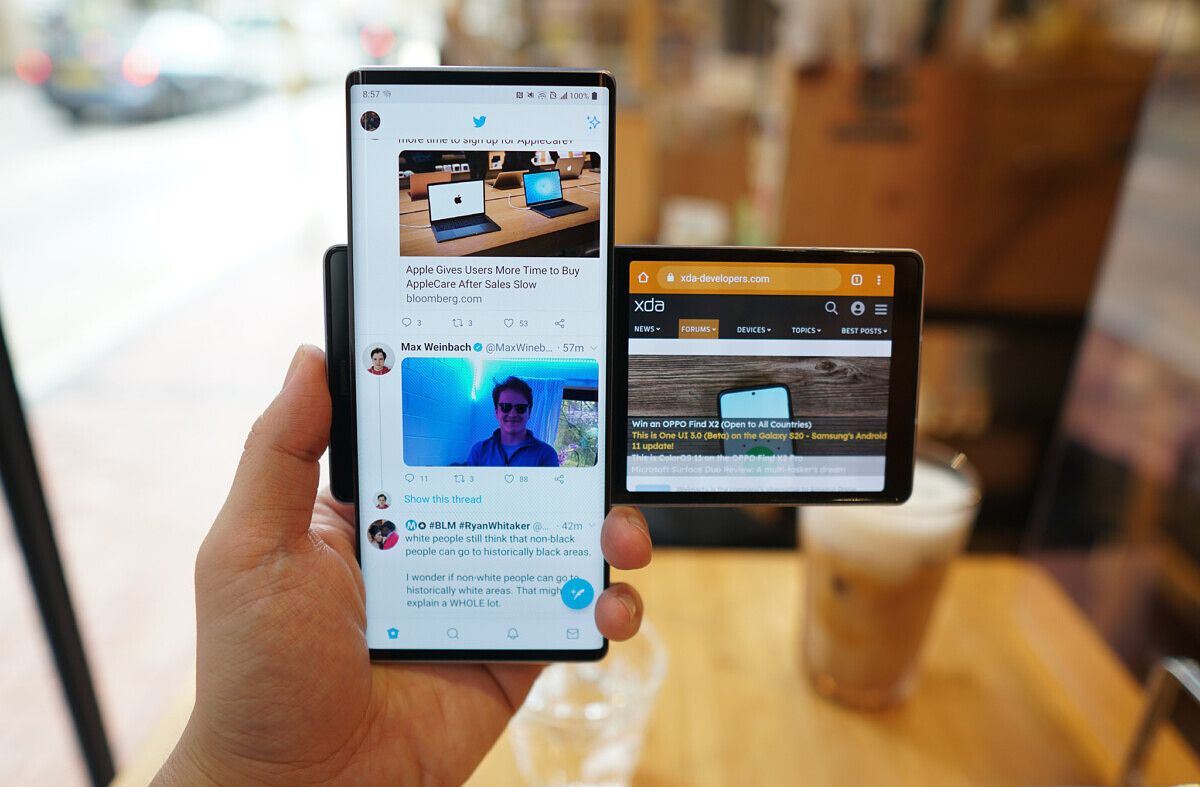
Best for multi-tasking: LG Wing, Microsoft Duo

If productivity is paramount, then two screens is obviously better than one. The LG Wing and Microsoft Duo take very different approaches to this dual-screen set-up. The Wing, in “normal mode,” resembles any other slab smartphone — it’s big, tall, curvy, with almost all-screen on its face. But give the bottom left side of the screen a little push and the front screen swivels, revealing a second screen in the back plate.

The Microsoft Duo, meanwhile, is more like two screens connected together by a very premium hinge. The Duo folds and opens like a book, and unlike the Wing, both screens are the same size.

Neither phone carry the most powerful SoC or best cameras, but these are productivity machines first and foremost. To be able to run, say, Slack on one screen while a word document or an email on the other is something most of us remote workers would enjoy.

    Microsoft Duo
    The Microsoft Duo is an amazingly thin dual-screen device that opens and close like a book. While there were some software quirks at launch, Microsoft has fixed enough of it that the device is usable. If you need to run two apps at the same time often, this is one of the best options.


The post These are the Best Android Phones to buy in 2020 appeared first on xda-developers.


from xda-developers https://ift.tt/3laOeRA
via IFTTT

Lenovo Legion 5 with AMD Ryzen 5 4600U processor launched in India

Lenovo has introduced the Legion 5 gaming laptop in India. The company already sells the Gaming 3i, Legion 5i, and Legion 7i, all of which are powered by the 10th-gen Intel mobile processors. With the launch of the new model, Lenovo now has an AMD Ryzen-powered option for gamers. We recently featured this notebook as one of the best affordable gaming laptops that you could buy this year. As of now, Lenovo is only offering the base variant of the Legion 5 in India that includes the Ryzen 5 4600H processor.

The Legion 5 is priced at ₹75,990 ($1,030) although the price is listed as ₹79,990 ($1,080) on the official Lenovo India website for the Phantom Black color option. The notebook follows the same design language as we saw on the Legion 7i, but does not include the flashy RGB lighting. Lenovo is also offering a one-year free Premium Care and one-year of Accidental Damage Protection for the legion 5 at 3,900 ($53). You can get the laptop from Lenovo.com and Lenovo Exclusive Stores. Lenovo also promises that the laptop will be made available across other online partner platforms and retail stores, soon.

The gaming notebook features a 15.6-inch IPS anti-glare display having a Full-HD resolution (1920 x 1080 pixels) with a 120Hz refresh rate. As mentioned above, it is powered by the AMD Ryzen 5 4600H processor which is a six-core processor with 12-threads and a clock speed of 3GHz with a max boost speed of up to 4GHz. There is 8GB of DDR4 RAM clocked at 3200MHz and for graphics, it features the NVIDIA GeForce GTX 1650 Ti having 4GB of GDDR6 memory. For storage, you get a 256GB M.2 PCIe 3.0×4 NVMe SSD as well as a 1TB HDD. As for ports and connectivity you get four USB 3.2 Gen 1 Type-A ports, one USB 3.2 Gen 1 Type-C port, an Ethernet (RJ-45), and a headphone/microphone combo jack. The notebook also comes with standard Wi-Fi 6 and Bluetooth 5.0.

Lenovo says that the notebook will offer a battery life of 8 hours with its ‘Hybrid Mode.’ Considering the AMD chipset is based on the 7nm node, we don’t believe that the results would be far from the claims. You also get Lenovo’s TrueStrike keyboard with white backlit keys along with Rapid Charge Pro for fast battery charging. The 720p webcam comes with a shutter slider that lets you shut the camera lens for extra privacy.

The post Lenovo Legion 5 with AMD Ryzen 5 4600U processor launched in India appeared first on xda-developers.


from xda-developers https://ift.tt/3lxVff2
via IFTTT

Instagram Live Rooms allows creators to add 3 users to a Live session

Instagram has become the de-facto platform for influencers and content creators, thanks to its tighter focus on photo and video sharing as a service. But COVID has changed how we create and consume content, with focus now turning towards shared Live experiences and interactions. Video calls are now the norm for personal calling, and multi-person virtual conferences the norm for events. Instagram is consequently adapting its Live strategy, as it is now allowing creators to add up to three additional people in Live Sessions through Live Rooms.

Instagram’s newest feature is called Live Rooms. Simply put, it is an extension of the existing Live functionality, with the flexibility of adding two more people in the session than previously allowed. Live sessions can now feature four people in the same window, allowing for greater flexibility in the topics that can be explored in these sessions. Previously, a Live session could hold only the creator and one additional guest — and if you need to add anyone else, you would need to remove the guest previously added.

Live Rooms was tested with a few creators in India, and the multi-participant video chat format received praise from them. Rollout for Live Rooms has begun and will soon be available to everyone in India and Indonesia. Instagram did not mention if and when this feature will be rolled out to the rest of the world, but we reckon global rollout will follow soon as well, as it did for features like Vanishing Mode and BTS Theme.

How to use Instagram Live Rooms

To go live on Instagram:

  • Tap the plus sign in top left hand corner of your stories tray or click the “Create” plus icon in the top right of home navigation bar
    • Note: you can also swipe left when you’re on your main Instagram home screen!
  • Scroll to and tap the Live camera option at the bottom
  • Use the menu on the left to add a title if you so choose
  • Tap the circular button to go live

To add guests to your live stream:

  • While you’re already live, tap the Camera/Rooms icon
  • Now, you’ll see people that have requested to join your live. You can also search for your guest’s name to send them a request to join your live.
  • Simply tap on the guest’s handle to add them
  • You can add all three guests at one time, and you can also add guests at a later time

Instagram (Free+, Google Play) →

The post Instagram Live Rooms allows creators to add 3 users to a Live session appeared first on xda-developers.


from xda-developers https://ift.tt/39scqMB
via IFTTT

The Huawei Watch GT 2 Pro, Honor Watch GS Pro, and Honor Watch ES are the best of LiteOS yet

I’ve been a rather open critic of LiteOS in the past, and I think from even my most recent coverage of the Huawei Watch GT 2e, it’s clear that a lot of its issues haven’t really been rectified in my eyes. Having said that, it’s not that LiteOS isn’t feature-packed, but rather that the features it packs aren’t really the kind that I value in a smartwatch. Huawei and Honor both launched their own wearables in the past month — Huawei launched the Huawei Watch GT 2 Pro at HDC 2020, while Honor launched both the Honor Watch GS Pro and the Honor Watch ES at this year’s rather scaled-back IFA 2020. We’ve gotten to use all three, and I must say, I’m a fan.

Specifications

Specifications Huawei Watch GT 2 Pro Honor Watch GS Pro Honor Watch ES
Dimensions & Weight
  • 46.7 x 46.7 x 11.4 mm
  • 52g
  • 45.5g
  • 21g
Display
  • 1.39″ Super AMOLED
  • 454 x 454 resolution
  • Sapphire Glass
  • 1.39″ Super AMOLED
  • 454 x 454 resolution
  • Glass
  • 1.64″ AMOLED
  • 280 x 456 resolution
  • Glass
Watchband options
  • Black Fluoroelastomer
  • Gray Brown Leather
N/A N/A
Internal Storage 4GB 4GB 4GB
Connectivity
  • GPS
  • Bluetooth v5.1 BLE
  • GPS
  • Bluetooth v5.0 BLE
  • Bluetooth v5.0 LE
Other features
  • Speaker
  • Wireless charging
N/A N/A
Sensors
  • Accelerometer
  • Gyroscope
  • Geomagnetic
  • Ambient light
  • Optical heart rate
  • Air pressure
  • SpO2
  • Accelerometer
  • Gyroscope
  • Geomagnetic
  • Optical heart rate
  • Air pressure
  • SpO2
  • Accelerometer
  • Gyroscope
  • Optical heart rate
  • SpO2
Battery 455mAh 790mAh 180mAh
Durability
  • 5ATM water resistance
  • 5ATM water resistance
  • MIL-STD-810G compliant
  • 5ATM water resistance
OS Huawei LiteOS Huawei LiteOS Huawei LiteOS
Colors
  • Night Black
  • Nebula Gray
  • Charcoal Black
  • Marl White
  • Camo Blue
  • Meteorite Black
  • Coral Pink
  • Icelandic White

About this article: The Huawei Watch GT 2 Pro was received for review for my own website, IrishTech.ie, while the Honor Watch GS Pro and the Honor Watch ES were received for review at XDA-Developers. Neither Huawei nor Honor had any input in the contents of this review.


Design and Comfort

Huawei Watch GT 2 Pro

The Huawei Watch GT 2 Pro features the most premium design of these three smartwatches, offering a traditional watch look and a sapphire glass front. The top is entirely flat, with ceramic glass underneath and a comfortable, fluoroelastomer strap. This is a comfortable watch to wear and looks the most stylish as well. I keep an always-on display enabled for the traditional watch look which adds to the experience, though you’ll take a battery hit by doing so. This one does get uncomfortable sometimes, but I can generally wear it with ease for hours on end.

Honor Watch GS Pro

The Honor Watch GS Pro also features a regular watch-like design. However, it’s incredibly bulky and uncomfortable to wear over long periods of time. It’s heavy as well. This is not the smartwatch to wear if you want something fashionable, though it’s clearly built to last and certainly doesn’t look bad. However, this will definitely not be everyone’s favorite design. I don’t know why, as it’s lighter than the Watch GT 2 Pro, but this watch feels uncomfortable and heavy on the wrist after only a few hours. I think it’s as a result of its bulk that I found myself taking it off rather frequently for a few minutes at a time. It’s not a huge issue, but it’s something to keep in mind and is to be expected from a bulky smartwatch.

Honor Watch ES

The Honor Watch ES has a rather unique design, taking the shape of a small, slightly curved, lightweight rectangle on the wrist. The overall OS and watchfaces have been adjusted to fit, and it’s definitely the most one of my favourites of the trio, While I prefer the Huawei Watch GT 2 Pro for its traditional watch-like design, the Honor Watch ES is the runner-up for its premium and unique look. The Honor Watch ES is the most comfortable of the three – light and small, you can entirely forget that it’s even there. I was able to wear it for days on end.

Software Features: LiteOS

Pretty much all three of these smartwatches offer the same features in different form-factors. The only real difference between all three is that the Honor Watch ES lacks GPS support. Even then, it can connect to your smartphone and use the GPS data from that, and if I’m honest, I don’t really ever just take my smartwatch with me somewhere. I understand that there are people who do, but I imagine that’s a rather niche use-case. All three of these devices can automatically detect workout activity and will offer to start tracking it for you.

Lack of GPS aside, all three of these smartwatches offer the bare minimum that a smartwatch should. Heart-rate tracking, accurate sleep tracking, and SpO2 monitoring for blood oxygen levels are the three mainstays of any LiteOS smartwatch, and none of them have been left out. There’s menstrual cycle tracking on all three devices too, alongside other choice-features such as a compass, alarms, a timer, and a weather report.

You can also enable notifications in the Huawei Health app too. The Huawei Health app is a must-have on your smartphone to set-up and configure all of these devices, and it also allows you to view your information. The latest version of the Huawei Health app can be downloaded from the Huawei AppGallery. You can no longer download newer versions from the Google Play Store, and a newer version is required to set these devices up.

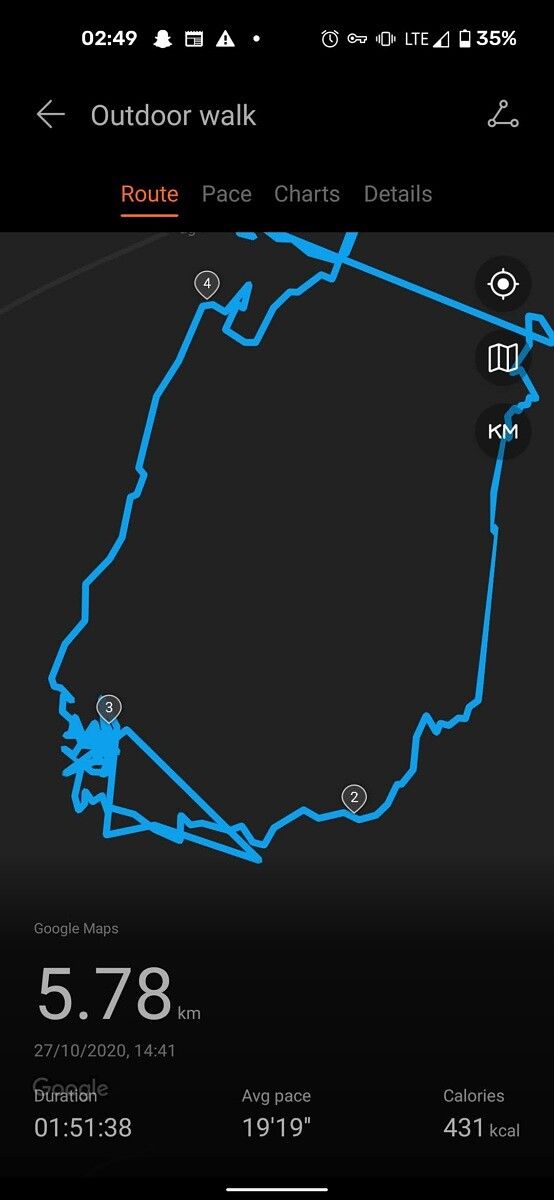
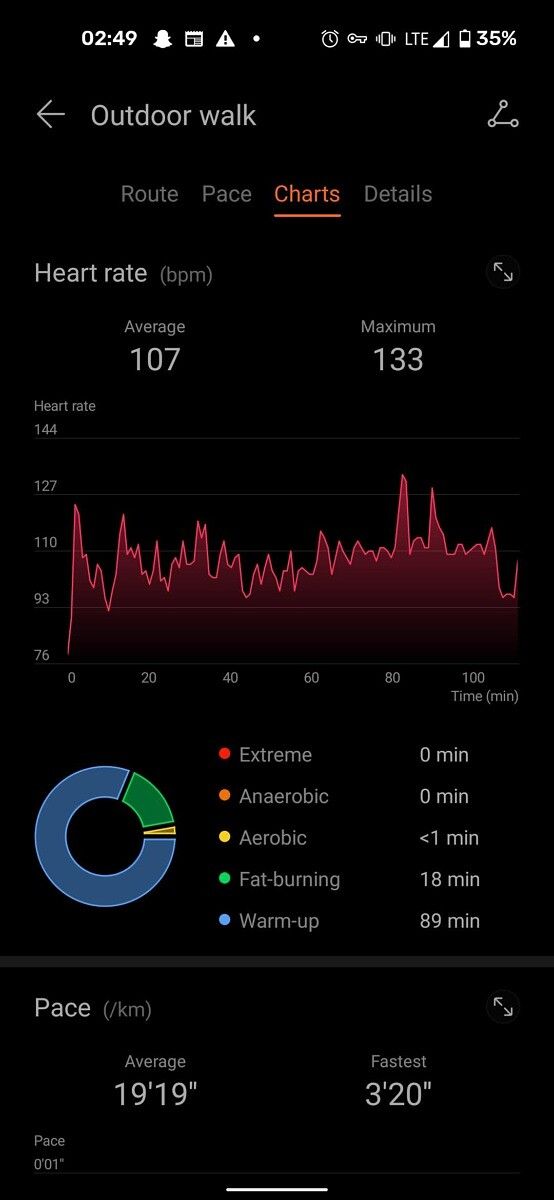
The screenshots above show the Huawei Health app in action and the data that it provides. You can view in-depth data from your walks, about your sleep, and more. I still maintain that the stress monitor is absolutely useless, but the rest of the features are fun and incredibly useful. I make use of the sleep tracker a lot to try (and admittedly fail) to maintain a sleeping pattern.

The walk that I went on was a rather slow walk, but I could see that the GPS on the Huwaei Watch GT 2 Pro was extremely accurate. This wasn’t too surprising, but it’s good to know that you can rely on it for accurate tracking. By the way, the Watch GT 2e review also goes a lot more in-depth about LiteOS if you want to check it out. The Honor Watch GS Pro was just as accurate, and I can easily recommend either of them for GPS tracking. In the case of the Honor Watch ES, that will just use your smartphone for tracking.

To summarise LiteOS — it has some nice ideas and works pretty well, however, the lack of apps is a killer. I understand that LiteOS smartwatches are not meant to be anything more than basic trackers, but they’re quite expensive despite that.

Unique Hardware Features

The unique hardware features of all three of these devices are where they truly stand out from each other. They all offer the same basic experience, but they are undoubtedly for three different types of people.

Huawei Watch GT 2 Pro

I’ll start with the Huawei Watch GT 2 Pro. This is the most premium of the three (with a premium price tag of €299), and it offers the most comprehensive experience. It has wireless charging for a start (rather than pin connectors), and there is both a speaker and an ambient light sensor too. I make use of the wireless charging capabilities quite frequently, which is nice and much easier than using a dedicated pin charger. It’s much easier to just take it off while I’m working at my desk. Given how infrequently I have to charge it, it always bothered me that for convenience, I needed to have a pin charger plugged in at all times, taking up a charging port, just to be used a couple of times a month.

As for the speaker, it’s not the best speaker in the world, but I was actually impressed that the audio was listenable considering how poor the speaker was on the Watch GT 2e. I still wouldn’t recommend using it all really (a talking watch will get you a few stares out in public) but it’s nice to have the hardware if you want to use it, I guess. It also features a sapphire glass front and Bluetooth v5.1, for all that that really matters.

Honor Watch GS Pro

The Honor Watch GS Pro went through 14 different MIL-STD-810G tests, including temperature-humidity-altitude resistance, salt spray, sand resistance, and humidity resistance. In other words, if durability is what you’re after, the Honor Watch GS Pro is definitely built like a tank. Because of that though, it can get uncomfortable to wear over long periods of time, which leads to me taking it off every now and again for a bit. I’m also a bit confused as to why it uses regular glass for the front rather than sapphire glass as well, given that it’s built to be rugged. Nevertheless, this watch is a fantastic choice for anyone who goes against the elements often. What’s more, this watch lasts 25 days on a single charge. You’ll get 48-hours of straight GPS usage out of it. This is a little bit cheaper than the Huawei Watch GT 2 Pro, coming in at €249.

Honor Watch ES

The Honor Watch ES doesn’t really offer much by way of unique features, but that’s the beauty of it. It’s a relatively inexpensive alternative to the other two smartwatches on offer, yet provides the basic experience of the other two for the everyday user. I don’t really care about a lot of the extra features of the other smartwatches, and for style points, the Honor Watch ES is my favorite of the three. It comes in at €99, much cheaper than the competition.


Conclusion

All of these smartwatches have their own merits, and I can recommend them all for different reasons. Want something a little bit on the lighter (and cheaper) side? The Honor Watch ES would be my go-to here. Want to go hiking? The Honor Watch GS Pro is the best. Finally, if you want the best of the best for everyday usage, you can’t go wrong with the Huawei Watch GT 2 Pro. It’s still LiteOS which can lack at times, however, these watches are the best of LiteOS yet.

    Huawei Watch GT 2 Pro

    The best of the best

    The Huawei Watch GT 2 Pro packs the best of LiteOS, offering the most complete hardware package of any LiteOS smartwatch yet.
    Honor Watch GS Pro

    The rugged watch

    Want something to withstand the elements as you go hiking with a seemingly-endless battery life? The Honor Watch GS Pro is the watch for you.
    Honor Watch ES

    The sleek one

    Looking for something small, comfortable, but still a bit fancy? The Honor Watch ES is small, light, relatively inexpensive, and still packs in loads of useful features!

The post The Huawei Watch GT 2 Pro, Honor Watch GS Pro, and Honor Watch ES are the best of LiteOS yet appeared first on xda-developers.


from xda-developers https://ift.tt/36rvSXC
via IFTTT